
Calinda
music from Slave Songs of the United States

In choosing tunes for Go Back and Fetch It, Rhiannon Giddens and I knew we wanted to include some from the collection Slave Songs of the United States, both to introduce it to people who might not be familiar with it, and to get some of the songs out into the repertoire. It is a big collection, so we knew we had to be selective, and we actually chose not to include one of the tunes that was most familiar to me, “Calinda.”
I had played it during book talks for Well of Souls, but it also kind of felt like a song folks could hear, if they wanted to find it. I had, in fact, learned about it from Slave Songs, and then one day, flipping through records at the house, saw that at some point Pete had acquired Danse Calinda! by The de Paur Chorus. Fun fact: I made the track the alarm on my phone.
I also love the version by the Lost Bayou Ramblers, which has different lyrics than the ones in Slave Songs.
A version has also become a Cajun standard, where ‘Calinda’ gets transformed from the name of the dance to a woman’s name, ‘Colinda.’
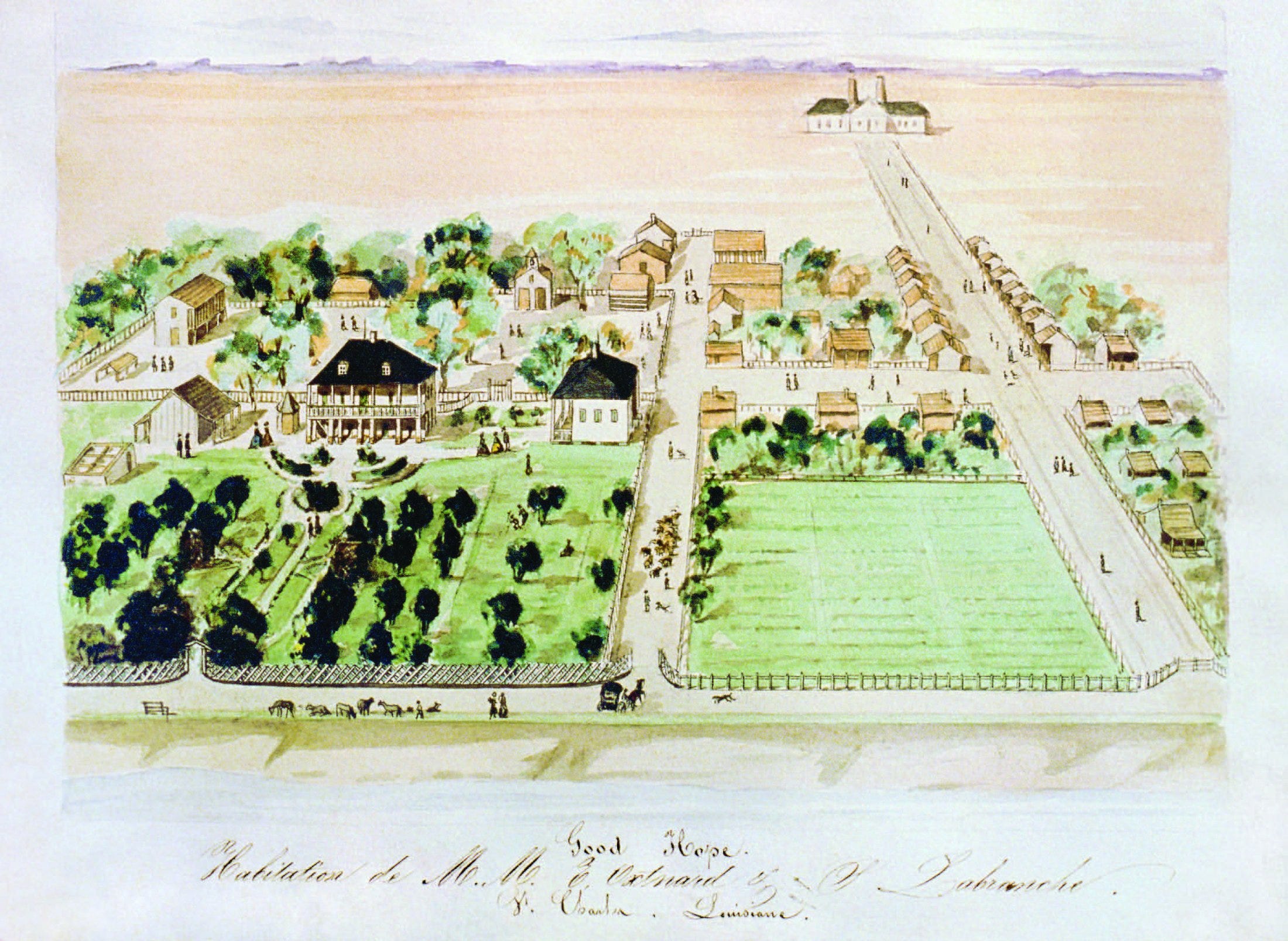
The pieces from Louisiana in Slave Songs were transcribed by “a lady” and heard “on the ‘Good Hope’ plantation, St. Charles Parish, Louisiana.”
The editors write that Calinda was a sort of contra-dance, which has now passed entirely out of use. They also partially cite Louis-Nicolas Bescherelle’s definition of the “Calinda,” which reads: Danse des nègres créoles en Amérique, qu’ils exécutent rangés sur deux lignes en face les uns des autres, avançant et reculant en cadence, et faisant des contorsions fort singulières et des gestes fort lascifs. Dance of the creole Blacks in America (meaning people of African descent born in the Americas), which is executed in an orderly way with two lines, one facing the other, advancing and retreating in rhythm, making very unusual contortions and very lascivious gestures.
I suspect that it was Lucy McKim Garrison who got this definition, based on everything I learned about her writing A Most Perilous World, and I suspect that Bescherelle based his definition on the many French accounts of calinda, which sometimes say that is European (hence the orderly country dance set up) and sometimes African (hence the derogatory terms used for the movements of Black dancers).
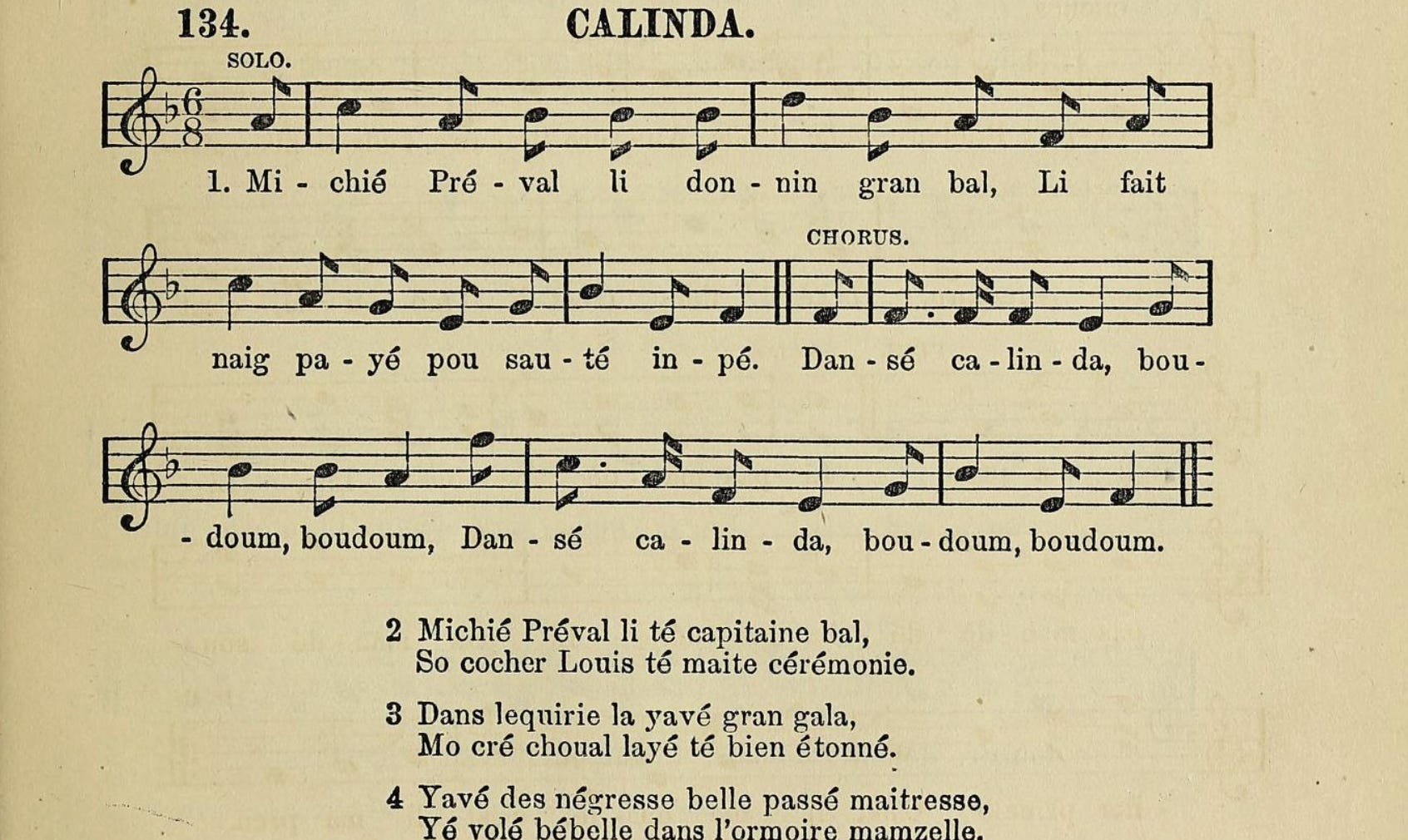
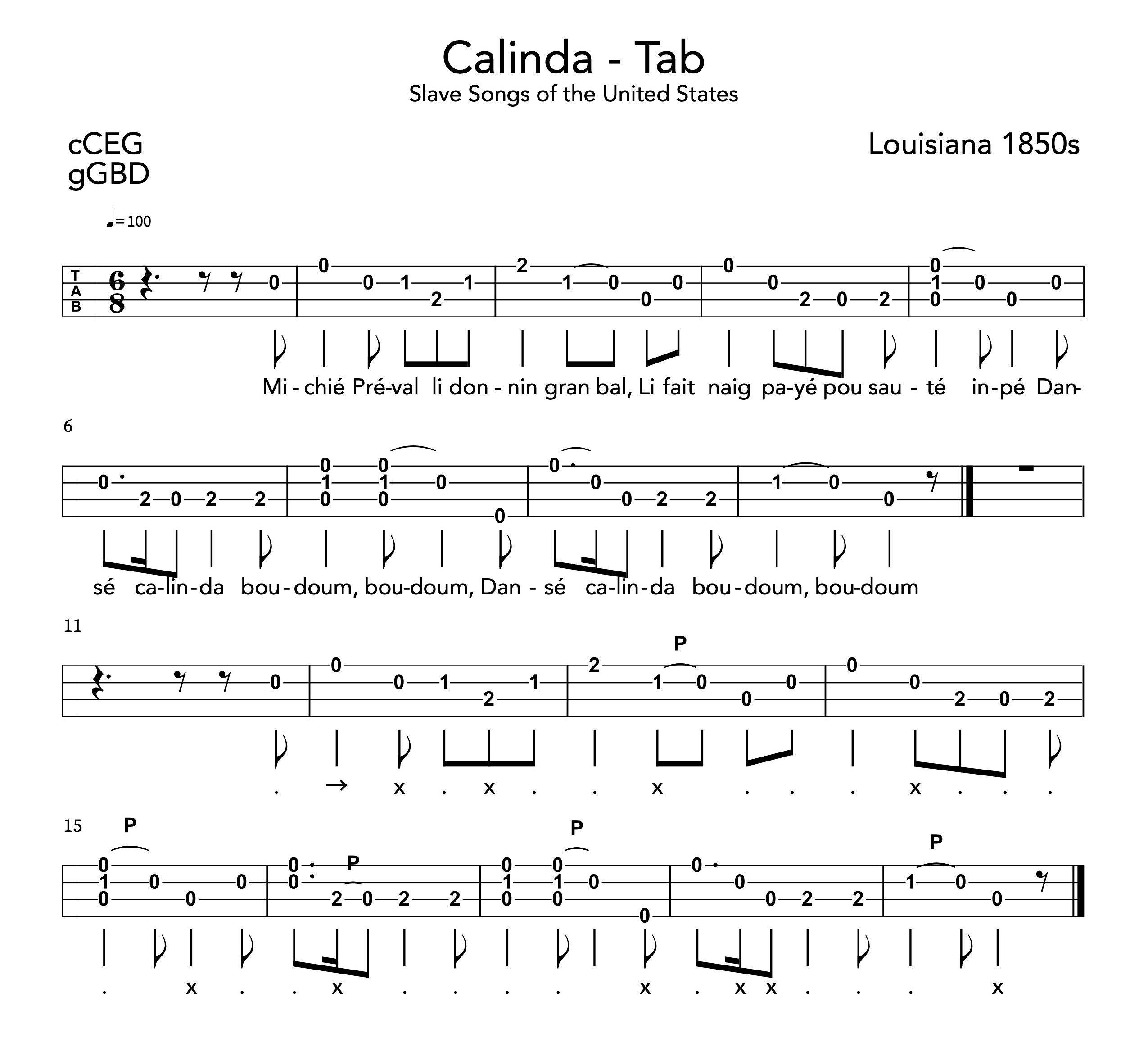
I have so much more to say about this version of Calinda (and the idea of the calinda/ kalenda/ calimba music and dance); so much more, in fact, that I’ll be talking about it at the American Society for Eighteenth-Century Studies conference in two weeks (see below for more April talks and events I’m doing!). But, for now, I want to share a banjo version with the tab that I’ve adapted. I love how far this piece has traveled, and maybe how much further it can travel…
Upcoming Events and Book Talks!
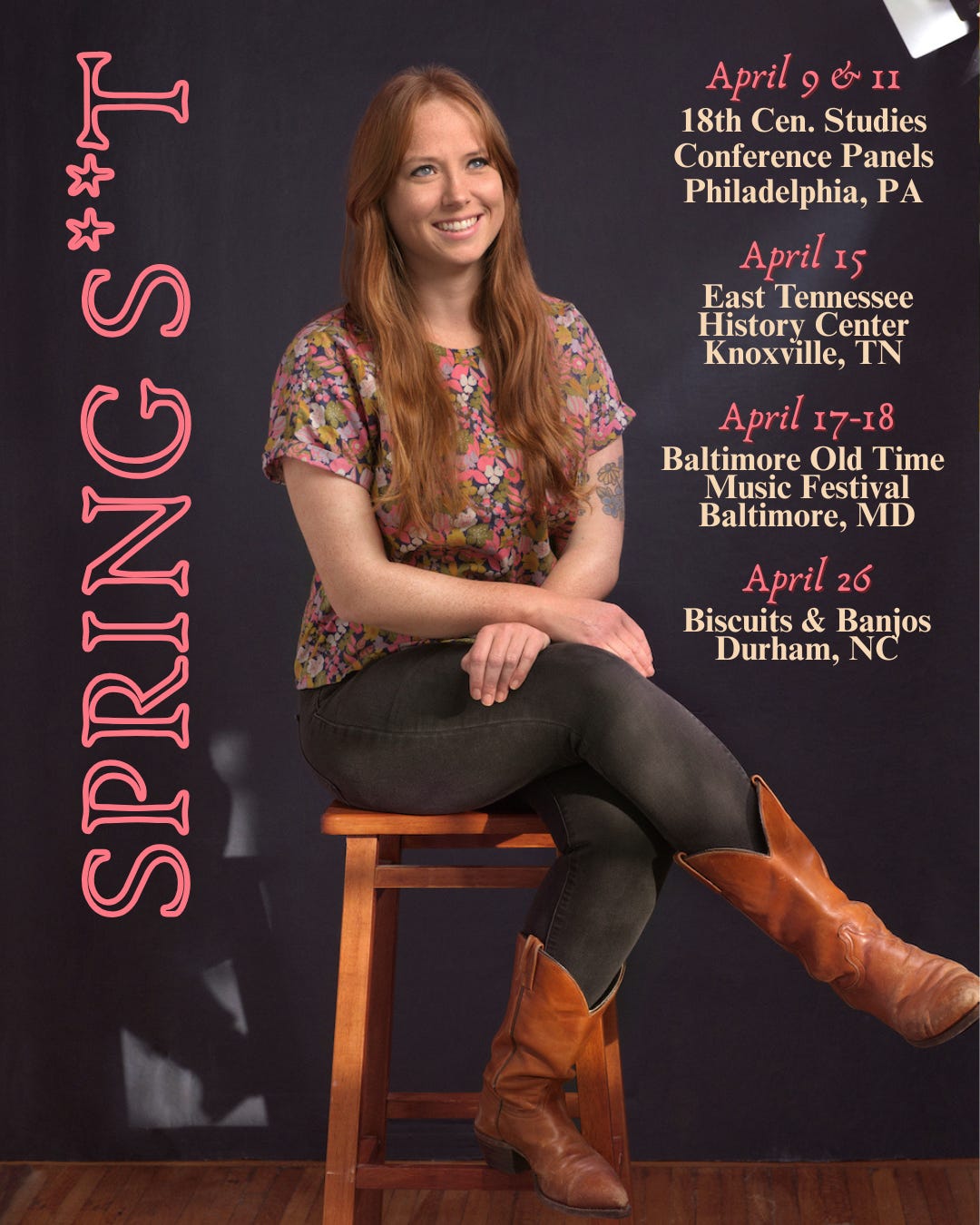
April 9 & 11 - 18th Century Studies Conference Panels, Philadelphia, PA
April 15 - East Tennessee History Center, Knoxville, TN — Presentation on Women and the Banjo to coincide with the “I’ve Endured: Women in Old Time Music” exhibit.
April 17-18 - Baltimore Old Time Music Festival, Baltimore, MD — Friday book talk with Rhiannon Giddens (Sold out!), Saturday panel on the Caribbean roots of Old Time
April 26 - Biscuits & Banjos, Durham, NC — Book talk with Rhiannon Giddens
 | A guest post by
|